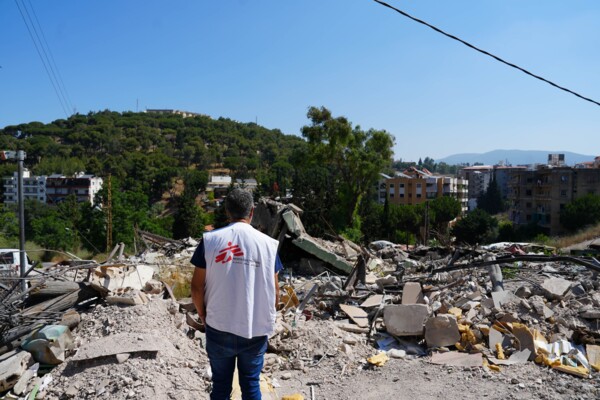
Doctors Without Borders documents the long-term effects of occupation forces’ attacks on civilians and the health sector in southern Lebanon
In a report titled “No One Is Safe from Danger,” Doctors Without Borders documented the killing and wounding of civilians, including children, elderly people and entire families, as a result of occupation forces’ attacks in southern Lebanon, as well as damage to hospitals, ambulances and rescue teams. The report highlighted the humanitarian repercussions…
Machine translation of an attributed source excerpt. Consult the original report to verify details. Translated from original reporting in another language.
The southern border and the Blue Line
What is independently established about the incident, and what is attributed to a party?
The UN identified the Blue Line in 2000 to verify Israeli withdrawal from Lebanon. UNIFIL explains that it is a withdrawal line, not an agreed international border.
UNIFIL · Blue Line FAQ ↗Security Council Resolution 1701, adopted in 2006, called for a full cessation of hostilities and strengthened UNIFIL’s mandate. The resolution is a reference for understanding reports about hostilities and deployments in southern Lebanon; it does not by itself verify a particular incident.
UN Security Council · 2006 ↗
Earlier reporting on this subject
- Doctors Without Borders issued a report documenting the consequences of Israeli attacks in southern Lebanon
- “Doctors Without Borders” documents the devastating consequences of Israeli attacks on civilians and the health sector in southern Lebanon
Sources checked: 2026-11-04